


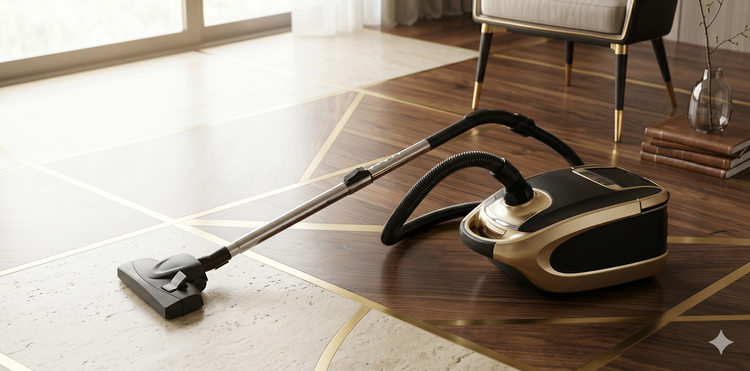
Best Canister Vacuum Cleaners 2026 – Bagged vs Bagless
Bagged vs. Bagless Canister Vacuums in 2026: Which One Actually Saves You More Money (and Sanity)?
You've been told bagless is the future. But the full picture is messier — literally. Here's what vacuum brands don't want you to figure out on your own
LET'S TALK ABOUT WHAT NOBODY TELLS YOU
When you search for a canister vacuum cleaner in 2026, you're immediately hit with a wall of specs — suction ratings, HEPA grades, wattage numbers, cord lengths. It's overwhelming. And buried in all that noise is a decision that matters more than any spec sheet: bagged or bagless?
Most buying guides treat this as a trivial preference. It isn't. Your choice here will shape how much you spend over the next five years, how clean your indoor air actually is, and how much frustration you deal with every time you clean the house.
Let's break it down honestly — no brand sponsorships, no filler.
Quick context: Canister vacuums (both bagged and bagless) remain the gold standard for thorough whole-home cleaning in 2026 — more powerful and versatile than stick vacuums, quieter and better on hard floors than most uprights.
HOW EACH TYPE WORKS
Bagged canister vacuums pull dirt through a suction system into a sealed disposable bag. When the bag is full, you remove it and toss it — dust and all — in the bin. The bag itself acts as an additional filtration layer.
Bagless canister vacuums use cyclonic air technology to spin debris into a clear bin. You pop open the bin, dump it, rinse it out if needed, and you're done. No ongoing bag purchases required.
Simple enough — but the real differences show up in daily use, long-term cost, and air quality, which is where people make the wrong call.
THE REAL COST BREAKDOWN
This is where the "bagless saves money" myth starts to unravel — partially.
Yes, you'll spend $10–$25 every few months on replacement bags for a bagged vacuum. Over three years, that's roughly $80–$150. That's real money. But here's what bagless owners tend to underestimate: the ongoing cost of filter replacements.
Bagless canister vacuums rely heavily on their filters to compensate for the lack of a bag's filtration layer. Foam pre-filters, HEPA post-filters, and cyclone mesh screens all need regular washing — and periodic replacement every 6–12 months. Premium replacement HEPA filters for mid-range models can cost $25–$60 each. Add in the shorter motor lifespan caused by dust particles that inevitably bypass filters, and the "savings" shrink considerably.
The real bagless tax: More frequent filter replacements + deeper cleaning maintenance + potential motor wear = a hidden cost most buyers don't account for.
The bagged system, on the other hand, keeps the motor cleaner and longer-lived. Premium bagged canister vacuums like Miele's lineup are routinely reported to last 15–20 years. That changes the math significantly.
SUCTION PERFORMANCE OVER TIME
Here's something that consistently surprises people: bagged vacuums maintain stronger suction longer.
Bagless vacuums lose suction as the bin fills — the debris partially blocks airflow, causing performance to drop. By the time you remember to empty it, you might have been cleaning with noticeably reduced power for a while.
Bagged vacuums don't suffer this problem nearly as much; air flows through the bag material efficiently until it's nearly full.
The flipside: with a bagless vacuum you can see how full the bin is at a glance. That visibility means you're more likely to empty it before it becomes an issue — if you pay attention.
HEAD-TO-HEAD: BAGGED VS. BAGLESS AT A GLANCE
Upfront Cost — Roughly similar for both types
Ongoing Cost — Bagged: ~$80–$150 in bags over 3 years | Bagless: No bag cost, but filter replacements add up
Allergy & Air Quality — Bagged wins. Sealed disposal means less dust exposure
Suction Consistency — Bagged wins. More consistent; bagless drops as bin fills
Ease of Emptying — Bagless wins. Quick, and you can see the fill level
Longevity — Bagged wins. Longer motor life with less dust exposure
Eco-Friendliness — Bagless wins. Reusable bin, less disposable waste
Weight — Bagless wins. Usually lighter and easier to maneuver
Pet Hair Performance — Bagged slightly better based on lab testing
Best For — Bagged: allergy sufferers, pet owners, long-term buyers | Bagless: budget-conscious, eco-minded, renters
THE ALLERGY & AIR QUALITY QUESTION
If anyone in your household suffers from allergies, asthma, or dust sensitivity — this section is the most important one you'll read today.
Bagged canister vacuums are the clear winner here. When the bag is full, you remove it and it stays sealed. The dust, dander, pollen, and microscopic debris stay locked inside. There's minimal opportunity for allergens to re-enter the air.
Emptying a bagless bin is a different story. Even with a "clean dump" mechanism, fine particles escape into the air when you open the bin — especially if you're doing it indoors over a trash can. People with dust allergies often report sneezing fits or eye irritation after emptying their bagless vacuum.
Allergy household verdict: Go bagged. A sealed HEPA bag system (like Miele's AirClean bags) is worth every penny if clean indoor air matters to you.
WHAT'S CHANGED IN CANISTER VACUUM TECH IN 2026
The vacuum category isn't static. A few developments worth knowing about if you're shopping this year:
HEPA filtration is now table stakes. Even mid-range canister vacuum cleaners — both bagged and bagless — now include multi-stage HEPA filtration as standard. A few years ago, this was a premium feature.
Quieter motors across the board. Noise complaints about canister vacuums have driven manufacturers to invest in acoustic insulation. The gap between "quiet" and "standard" models has narrowed significantly.
AI-assisted suction adjustment has started appearing in higher-end models, automatically detecting floor type and adjusting motor speed. It's a genuine quality-of-life improvement — not just a marketing gimmick.
Lighter bagless designs have improved. Bagless canisters are notably lighter than they were just a few years ago, which matters if you have a multi-story home or mobility concerns.
WHO SHOULD BUY BAGGED?
- You or anyone at home has allergies or asthma
- You have pets and clean frequently
- You want the vacuum to last 10–15+ years
- You hate fiddling with filters and washing bins
- Air quality in your home is a priority
- You vacuum large, high-traffic areas regularly
WHO SHOULD BUY BAGLESS?
- You're renting and don't want long-term recurring costs
- You're on a tighter budget upfront
- You prefer a lighter, easier-to-maneuver machine
- You clean smaller spaces like an apartment or studio
- You care about reducing disposable waste
- You like seeing exactly when to empty
THE MISTAKE MOST BUYERS MAKE
The most common mistake people make when buying a canister vacuum cleaner is treating the bagged vs. bagless choice as a minor preference and spending all their energy comparing suction wattage instead.
Suction numbers on spec sheets are rarely tested in real-world conditions. The bag or bin decision, on the other hand, will affect every single cleaning session you do. Get that right first — then pick the model within that category that fits your budget.
The second mistake? Buying cheap on either side. A $60 bagless canister will disappoint you. A discount bagged vacuum will lose suction within a year. The sweet spot — whether bagged or bagless — is the $200–$400 range for most households, with premium options worth it if you're cleaning frequently or have specific health needs.
THE VERDICT
There's no universally "better" option — but there is a smarter option for your specific situation.
Buy BAGGED if:
- Allergies, asthma, or pets are a factor
- You want long-term durability
- You vacuum large spaces often
- Air quality is a top priority
Buy BAGLESS if:
- You want zero recurring bag costs
- Lighter weight is important to you
- You clean a smaller home
- You're eco-conscious about waste
Either way — buy within a trusted brand (Miele, Kenmore, Shark, Bissell), skip the ultra-budget options, and make sure your model has HEPA filtration. Those three rules will serve you well regardless of which side of this debate you land on.
FINAL THOUGHT
In 2026, both bagged and bagless canister vacuums have never been better. The technology gap between them has closed — the real differences now come down to your home, your health needs, and how you personally want to manage maintenance.
Don't let a marketing trend make the decision for you. Think about who lives in your home, how often you clean, and what you're actually willing to spend over the next five years. That's how you find the right canister vacuum — not by chasing the shiniest spec sheet.
Happy cleaning.
Blog posts
-

 Henry Vacuum Canada: The Complete Buyer's Guide to Every Model (2026)Read more →
The Henry Vacuum is a canister-style vacuum cleaner manufactured by Numatic International, a UK-based company. It uses a bagged HepaFlo filtration system, a 620–680W high-efficiency motor, and a spring-free cable rewind system.
-

 Central Vacuum Bags Explained: Types, Filtration Ratings, and Replacement Tips for Canadian HomeownersRead more →
The best central vacuum bags for your home come down to three variables: correct physical fit for your unit model, filtration grade matched to your household's air quality needs, and timely replacement before the bag restricts airflow.
-

 Canister Vacuum Cleaners: The Expert Buyer's Guide for Canadian Homes (2026)Read more →
Canister vacuums are the preferred format in Europe and Canada—markets where multi-story homes with mixed hard floors and area rugs dominate. Unlike uprights, the low-profile head slides under furniture without requiring the entire machine to tilt.
-

 Best Central Vacuum Systems Canada: The Complete Buyer's Guide (2026)Read more →
A quality best central vacuum systems canada from brands like CanaVac, Cyclovac, or DrainVac typically lasts 15–25 years with basic maintenance. The motor is the primary wear component; replacement motors are available through The Vacuum Store for all stocked brands.


